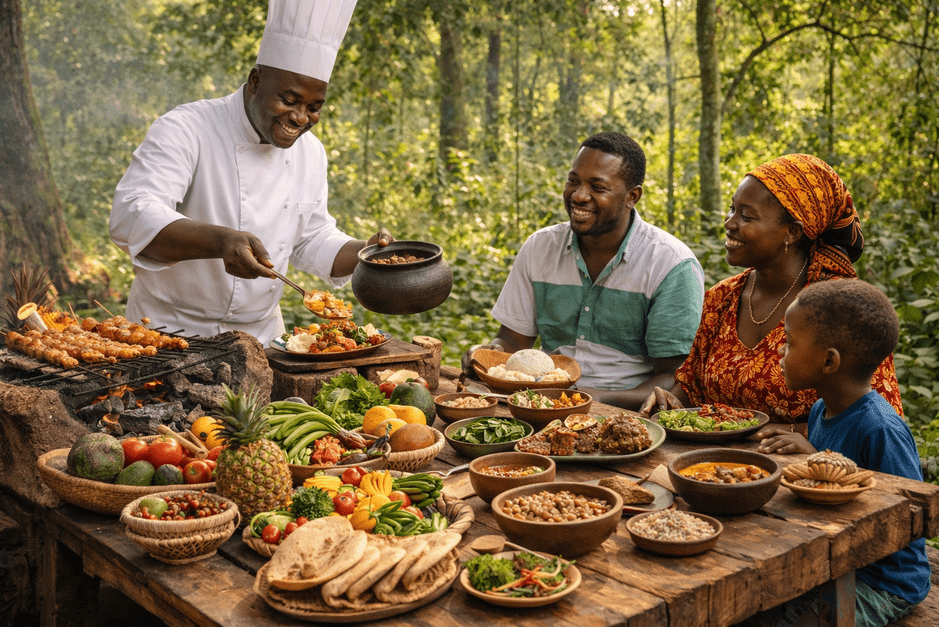
Forest & Farm-to-Table Cuisine in Tanzania: Exploring Fresh, Local, and Traditional Flavors
When people think of Tanzanian food, they often imagine street food in Dar es Salaam or Zanzibar’s coastal spices. While these are delicious, a different culinary story unfolds in rural Tanzania, where forest produce, farms, and home gardens directly shape the meals on the table. This is the essence of forest and farm-to-table cuisine—fresh, locally sourced, seasonal, and deeply connected to the land.
Travelers exploring this side of Tanzania discover traditional dishes, sustainable farming practices, and the personal stories of families who grow, cook, and eat from the land.
What is Forest & Farm-to-Table Cuisine?
- Locally Sourced Ingredients: Meals are prepared with vegetables, grains, fruits, and herbs grown nearby.
- Seasonal Eating: Dishes change with the harvest cycles and forest foraging.
- Traditional Cooking Methods: Cooking often involves open fire, clay stoves, or stone ovens, preserving flavor and nutrition.
- Sustainable Practices: Farmers and villagers grow, gather, and cook without industrial methods, reducing waste and carbon footprint.
- Cultural Connection: Food reflects tradition, family customs, and local knowledge.
Forest and farm-to-table cuisine connects travelers to the rhythms of rural life while offering authentic, nutritious, and flavorful meals.
Typical Ingredients in Rural Tanzanian Cuisine
1. Forest and Wild Produce
- Moringa leaves, wild spinach, mushrooms, and edible greens
- Fruits like tamarind, guava, or baobab for sauces, drinks, and snacks
- Villagers collect these ingredients sustainably from nearby forests and bushes
2. Farm-Fresh Vegetables and Grains
- Common crops: maize, cassava, beans, sweet potatoes, and rice
- Leafy greens, tomatoes, onions, and peppers are grown in small gardens
- Ingredients are often organic, free from chemical fertilizers or pesticides
3. Livestock and Protein Sources
- Chickens, goats, and cattle provide meat, milk, and eggs
- Fish is often sourced from local rivers, lakes, and ponds
- Small-scale poultry and fishing ensure fresh and seasonal protein
4. Herbs and Spices
- Common herbs: cilantro, parsley, garlic, ginger, turmeric, and local chili
- Coastal or highland regions may use cinnamon, cardamom, or clove for flavoring
- Herbs are often grown in family gardens or collected from wild areas
Popular Forest & Farm-to-Table Dishes
- Ugali with Leafy Greens: A staple made from maize flour, served with sautéed spinach, amaranth, or cassava leaves.
- Matoke (Steamed Plantains): Often served with groundnut sauce or beans.
- Vegetable Stews: Seasonal vegetables combined with tomatoes, onions, and local spices.
- Grilled or Smoked Fish: Freshly caught from rivers or lakes, often served with ugali or rice.
- Home-Brewed Juices and Drinks: Tamarind, baobab, or hibiscus-based drinks made from forest fruits.
Why Forest & Farm-to-Table is Special
- Freshness: Ingredients are picked minutes or hours before cooking.
- Flavor: Natural, unprocessed ingredients retain their taste.
- Health Benefits: Meals are nutrient-rich and free from additives.
- Cultural Authenticity: Recipes are passed down through generations, reflecting history and geography.
- Sustainability: Low-impact farming preserves forests, soil, and biodiversity.
Travelers get to taste food as locals eat it, providing insight into daily life and traditions.
Experiencing Forest & Farm-to-Table Cuisine
1. Farm Visits
- Travelers can tour smallholder farms, coffee estates, or spice gardens
- Learn about crop cycles, soil care, and harvesting practices
2. Cooking with Families
- Join a local family in preparing traditional meals
- Learn techniques like stir-frying greens, steaming plantains, or grilling fish
3. Village Markets
- Explore markets for fresh produce, grains, and forest-sourced ingredients
- Opportunity to buy local spices and herbs to take home
4. Forest Foraging Tours
- Guided walks with locals to collect wild vegetables, fruits, or mushrooms
- Learn which plants are edible, medicinal, or ceremonial
Benefits for Travelers
- Cultural Immersion: Understand the connection between food, land, and tradition.
- Healthier Meals: Enjoy fresh, unprocessed, and balanced dishes.
- Sustainable Travel: Supports small farmers and local food systems.
- Hands-On Learning: Participate in cooking, harvesting, and foraging activities.
- Unique Memories: Sharing meals with locals creates personal and authentic experiences.
Tips for Travelers
- Ask About Ingredients: Learn where food comes from and how it is prepared.
- Participate in Preparation: Experience cutting, cooking, and serving alongside locals.
- Respect Local Customs: Meals are often eaten with hands or in communal settings—follow local etiquette.
- Seasonal Awareness: Ingredients vary by season—be flexible and curious.
- Support Local Farmers: Buy extra produce or ingredients directly from smallholder farms.
Taste the Heart of Tanzania
Forest and farm-to-table cuisine offers more than just meals. It provides a window into Tanzanian culture, traditions, and sustainable living. Traveling this way allows visitors to:
- Experience authentic, fresh, and flavorful dishes
- Engage with local families and communities
- Support smallholder farmers and sustainable practices
- Learn traditional cooking techniques and forest knowledge
For travelers seeking cultural immersion, authentic flavors, and meaningful experiences, exploring Tanzania’s forest and farm-to-table cuisine is a journey that nourishes both body and soul.