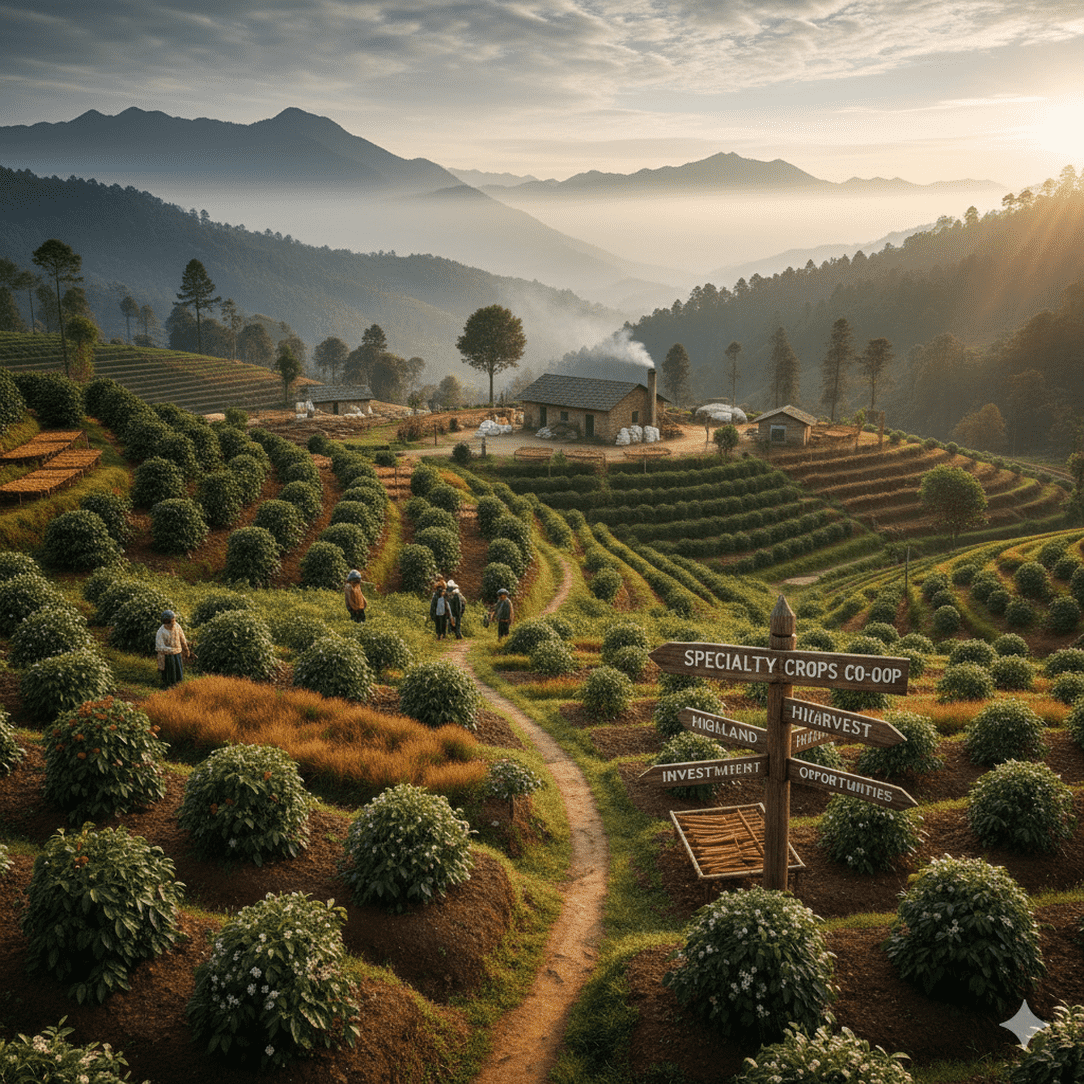
Agribusiness and specialty-crop farming: exploring investment potential in farming high-value or niche crops (spices, specialty coffee/tea, etc.) in rural or highland regions.
Tanzania is blessed with fertile soils, diverse climates, and rich agricultural traditions. Beyond the famous crops like maize and cassava, the country has tremendous potential for high-value and specialty crops such as spices, specialty coffee, tea, and fruits. For investors, both local and international, these opportunities combine profitability with rural development, creating benefits for farmers, communities, and the economy.
This blog explores agribusiness and specialty-crop farming in Tanzania, highlighting key crops, regions, investment strategies, and community impacts.
Why Invest in Specialty-Crop Farming in Tanzania?
- Fertile Land and Ideal Climate: Regions like the Usambara Mountains, Kilimanjaro highlands, and southern highlands provide perfect conditions for coffee, tea, spices, and horticultural crops.
- Growing Market Demand: Specialty crops have domestic and international markets, including organic and fair-trade niches.
- Rural Employment: Investments create jobs for smallholder farmers, women, and youth, supporting local economies.
- Sustainability Potential: With the right techniques, farming can be environmentally friendly, organic, and climate-smart.
- Government Support: Tanzania encourages agribusiness through tax incentives, land policies, and export promotion.
Specialty-crop farming combines profitability, social impact, and sustainability, making it an attractive investment.
Key Specialty Crops for Investment
1. Coffee
- Regions: Kilimanjaro, Mbeya, Arusha, and Njombe highlands
- Varieties: Arabica (highland regions) and Robusta (lower altitudes)
- Opportunities: Specialty coffee for export, organic certification, or boutique roasters
- Community Impact: Many coffee farms are smallholder cooperatives, providing income for families
2. Tea
- Regions: Usambara Mountains, Southern Highlands
- Varieties: Black, green, and specialty teas for international markets
- Opportunities: Tea estates, boutique tea brands, and agro-tourism linked to tea plantations
- Community Impact: Jobs in planting, plucking, processing, and packaging
3. Spices
- Regions: Zanzibar (cloves, cinnamon, nutmeg), Pemba, Tanga
- Opportunities: Export, essential oils, organic farming
- Community Impact: Spice farming is labor-intensive, empowering women and youth
4. Horticultural Crops
- Crops: Avocados, macadamia nuts, passion fruit, vegetables
- Regions: Arusha, Kilimanjaro, Mbeya, Morogoro
- Opportunities: Local markets, export to Europe or Middle East, processed products
- Community Impact: Improves nutrition and income for rural households
5. Fruits and Nuts
- Crops: Mangoes, papaya, cashews
- Regions: Coastal regions, southern highlands, northern regions
- Opportunities: Juice production, dried fruit, nut processing, export
- Community Impact: Creates value chains for farmers and processors
Investment Models in Specialty-Crop Farming
- Smallholder Support and Outgrower Schemes:
- Partner with small farmers who grow crops for your business
- Ensures local employment and community engagement
- Estate Farming:
- Establish large-scale farms in fertile regions
- Focus on quality control, processing, and export-ready crops
- Agro-Processing:
- Add value through drying, packaging, oil extraction, and branding
- Opens higher-profit markets and reduces post-harvest losses
- Agro-Tourism Integration:
- Combine farming with guesthouse stays, farm tours, and hands-on experiences
- Attracts tourists while showcasing Tanzanian agriculture
Challenges and How to Overcome Them
- Climate Risks: Drought, erratic rainfall, and pests can affect yields.
- Solution: Use climate-smart techniques, irrigation, and pest management.
- Infrastructure Gaps: Poor roads and limited storage facilities may affect distribution.
- Solution: Partner with local logistics providers, invest in storage and cold chains.
- Market Access: Smallholder farmers may lack access to international buyers.
- Solution: Build cooperatives, certifications (organic, fair trade), and marketing networks.
- Skilled Labor: Rural areas may lack experienced agricultural workers.
- Solution: Provide training programs for farmers and local communities.
How Specialty-Crop Farming Benefits Local Communities
- Income Generation: Provides steady earnings for smallholders and seasonal workers.
- Skills Development: Farmers learn modern cultivation, processing, and marketing techniques.
- Empowering Women and Youth: Many farms employ women and young people in spice picking, coffee plucking, and processing.
- Community Development: Revenue supports schools, health centers, and local infrastructure.
- Sustainable Practices: Encourages organic farming, soil conservation, and water management.
Investments in specialty crops enhance both profitability and social impact, creating a positive cycle of rural development.
Tips for Investors
- Start Small: Pilot a plot or partnership before scaling to large estates.
- Focus on Quality: Specialty crops rely on premium quality for niche markets.
- Engage Communities: Build trust and support local labor, training, and cooperatives.
- Use Technology: Mobile platforms for market prices, irrigation tools, and crop monitoring improve yields.
- Sustainable Practices: Organic farming, composting, and renewable energy reduce costs and attract premium buyers.
A Promising Future for Agribusiness in Tanzania
Tanzania’s fertile lands, favorable climate, and rich agricultural heritage make it ideal for specialty-crop farming. From coffee and tea in the highlands to spices on Zanzibar and fruits across rural regions, there are multiple investment opportunities that benefit both investors and local communities.
With thoughtful planning, sustainable practices, and community engagement, agribusiness in Tanzania can create profit, social impact, and environmental benefits simultaneously.
Whether you are a local entrepreneur or foreign investor, Tanzania offers the perfect combination of fertile lands, growing markets, and a skilled labor force to make specialty-crop farming a rewarding venture.